
Navigating AI-Enabled Product Lifecycle Management (PLCM)
3 Core Opportunities and the Essential Safeguards of Vibe Coding
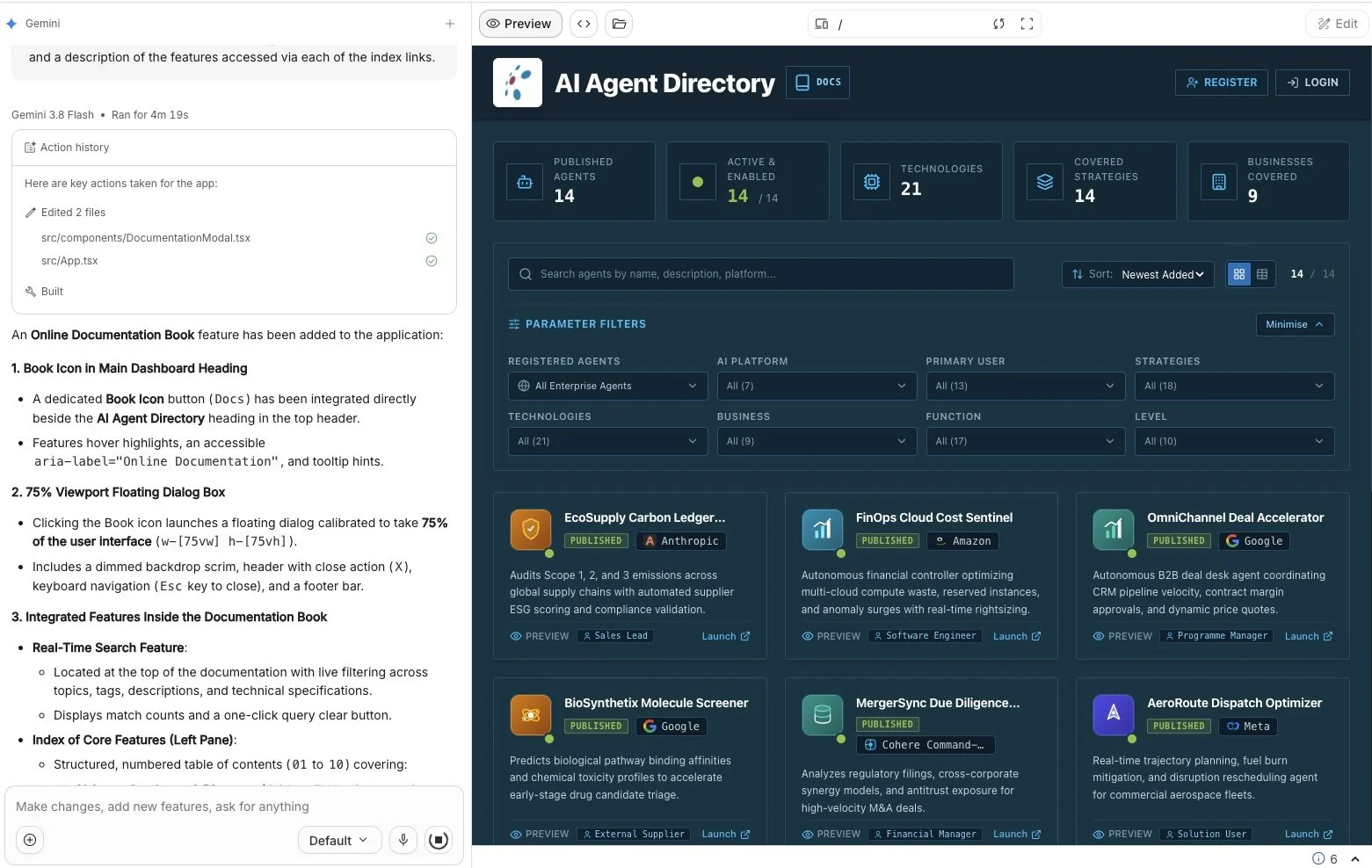
Over the last two months, Monetical has supported a client as they make the leap into adopting AI-enabled Product Lifecycle Management (PLCM); Specifically, leveraging Google AI Studio and Google Gemini Notebook.
This hands-on implementation journey has provided practical, front-line insights into 3 Core transformative opportunities as well as revealing several previously hidden operational pitfalls of AI-assisted software development that require us to counter the False Sense of Security that emerges.
The insights that were discovered are:
3 Core Opportunities for Project Teams
Rebalancing the Core Economics of Software Delivery
Accelerated Feature Creation via Natural Language Programming
Eliminating the Manual Burden of Project Collateral
The Safeguards: Countering the False Sense of Security
Treat Prompt Writing as a Core Competence (including Negative Constraints)
Retain Traditional Design and Protect Critical User Journeys
Safeguard Factual Accuracy and Retain Ownership
3 Core Opportunities for Project Teams
Rebalancing the Core Economics of Software Delivery
Project teams have historically struggled with a structural delivery imbalance: an infinite demand for new features contrasted with a limited supply of highly skilled resources. Combining vibe coding with an AI-powered assistant that strictly draws from user-provided sources helps cross-disciplined teams enhance their capabilities and address this delivery bottleneck.
Accelerated Feature Creation via Natural Language
The ability to generate software features directly through natural language instructions provides remarkable ease and speed. It drastically lowers the friction of initial implementation, enabling teams to translate concepts into working features far faster than traditional workflows permit.
Eliminating the Manual Burden of Project Collateral
AI tools like Gemini can generate high-quality presentations, summary sheets, and status reports directly from a wide variety of uploaded project artefacts. This removes the tedious, time-consuming manual burden historically needed to delicately translate raw project information into stakeholder-focused communications. Agents take care of the collection, distribution and tracking of such artefacts in real-time.
Important observations, when writing vibe coding prompts include a request for suggested features be presented for review, before proceeding to implement them. By making this condition part of the Prompt, the application will not run away implementing associated common features that have not been requested, and will avoid the need for further prompts designed to remove/erase such unwanted changes.
The Safeguards: Countering the False Sense of Security
The efficiency and velocity of automated generation can easily lull teams into a false sense of security, blinding them to compounding complexity and factual errors. To ensure teams remain grounded, three critical safeguards must be established:
Treat Prompt Writing as a Core Competence (Negative Constraints):
Because feature creation feels so effortless, teams can become mesmerised and allow feature creation to run away with itself. Prompt writing must be treated as a disciplined core competence where specifying what a feature should not do carries just as much importance as defining what it should do, preventing an inevitable explosion of unnecessary code and sub-features.
Retain Traditional Design and Protect Critical User Journeys:
When interconnected features and sub-features become the default, teams trigger a "race to the bottom" that drastically inflates quality testing and documentation overhead. Teams must retain traditional design methodologies, resist the temptation to build simply because it is easy, and maintain focus on the critical user journey and the unique features that deliver true value.
Safeguard Factual Accuracy and Retain Ownership:
While producing reports and decks with AI is mesmerisingly efficient, speed can blind teams to inaccuracies. Historically, converting project data into stakeholder materials was handled with delicate care; removing that manual translation risks eroding content quality and personal ownership. Teams must deliberately review, fact-check, and maintain strict governance over all AI-generated collateral rather than accepting it at face value.