The Era of Product & Project Mgt Convergence
Effectively embracing the opportunities of Generative AI in the domain of Product Management
"AI is catalysing a merger between Strategy (Product Management) and Execution (Project Management), effectively unifying two historically separate disciplines into one."
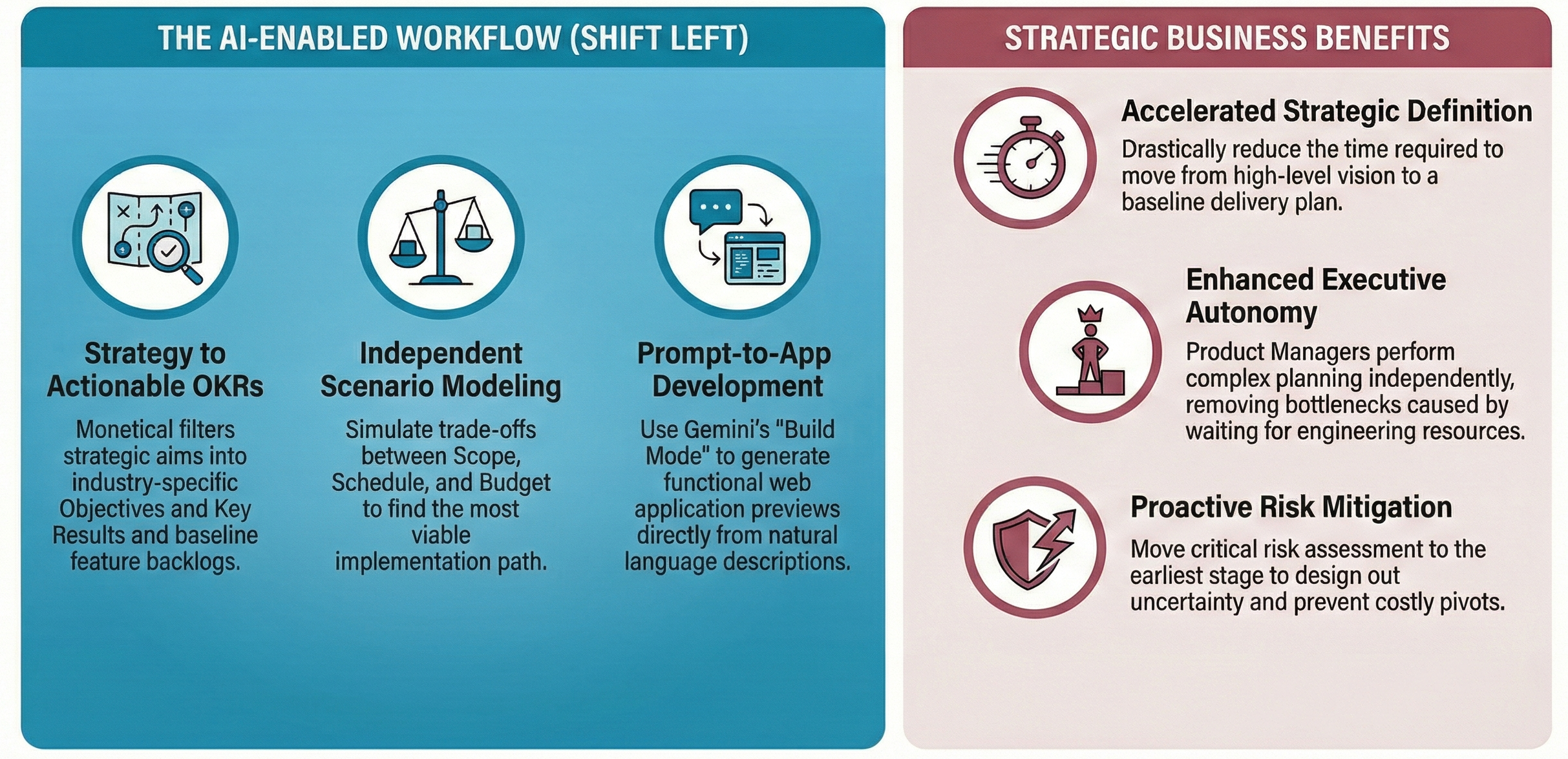
"Product orchestration is about giving Product Managers the power to do more, sooner. By using AI (like Google Gemini), they can tackle difficult planning tasks at the very start of a project — a strategy known as 'Shift Left'—without having to wait for input from engineers or other team members before creating an early-stage implementation roadmap.”
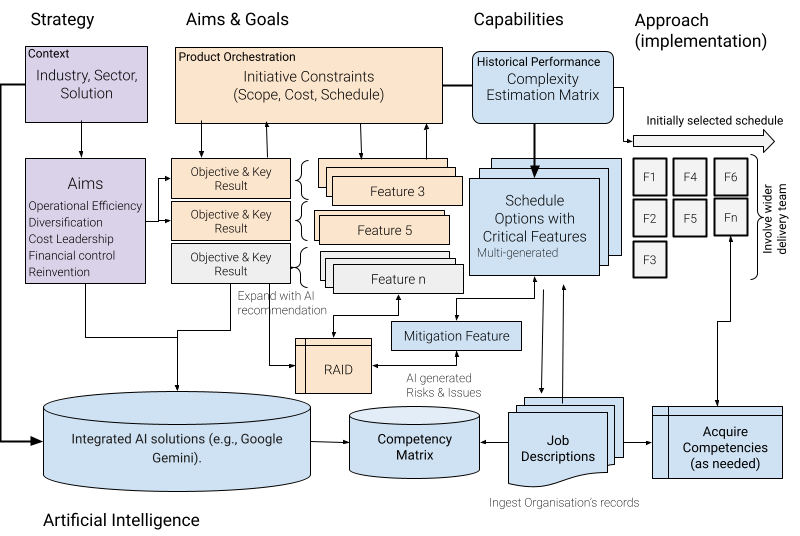
By using AI developed applications Product Managers can effectively transform strategic aims into a series of OKRs and rapidly generate a baseline backlog of Features, the Product Manager gains the autonomy to model multiple implementation scenarios. The ability to independently simulate trade-offs between Scope (quality), schedule (time), and Budget (resources) to determine the most viable path forward before engagement begins. This planning process is made possible by proactively identifying execution challenges. It cross-references the backlog against known competencies and risks, while simultaneously calculating the effort for each feature using an ingested complexity estimation matrix.
While the estimates will require final approval by the team responsible for implementation, the Product Manager has the capability to refine OKRs and negotiate an overall implementation strategy and define some key milestones with their Stakeholders much earlier. Furthermore, by moving the critical risk assessment activity to the earliest possible stage of the life cycle, will significantly reduce uncertainty and enable mitigation activities to be scheduled or designed-out of the project.
The key benefits of this intelligent approach to product orchestration are:
Accelerated Strategic Definition: By using AI to draft OKRs and feature backlogs, the time required to move from high-level strategy to a baseline delivery plan is drastically reduced.
Enhanced Autonomy: Product Managers can perform complex planning independently, removing the bottleneck of waiting for engineering resources to be available for early-stage estimation.
Data-Driven Decision Making: The ability to model multiple implementation scenarios allows for a rigorous comparison of options, ensuring the chosen path is based on data rather than intuition.
Proactive Risk Management: By simulating trade-offs between Scope, Schedule, and Budget before engagement begins, potential conflicts are identified and resolved early, preventing costly pivots later in the project.
A Shift Left Strategy
Adopting a 'Shift Left' strategy empowers Product Managers to transcend their traditional focus on the 'What' and 'Why' (Strategy, Market Fit, Vision). They gain the capabilities to also develop the early-stage 'How' and When' characteristics —including timelines, budgets, risk, and compliance.
This expansion of the Product Manager’s role significantly reduces dependency on dedicated Project Managers during the early-stages of the project. Should the power of AI continue at its current pace, we may see a day when the Project Manager role disappears entirely, as the discipline transforms from a standalone position into a set of automated tasks managed by the Product Manager.
Google Gemini 3.0 Pro
Since its release on the 18th November, 2025, the Monetical team has been evaluating the capabilities of the Gemini 3.0 Pro model within Google AI Studio. Gemini’s capacity to support these use cases is impressive:
filtering and mapping strategic aims to industry specific objectives and key results (OKRs)
create a baseline product backlog of features associated to the OKRs
produce detailed competency matrix for each feature and associated resources (ingested job descriptions)
generative a Risk and Issues log based on the Features that have been added to the Backlog
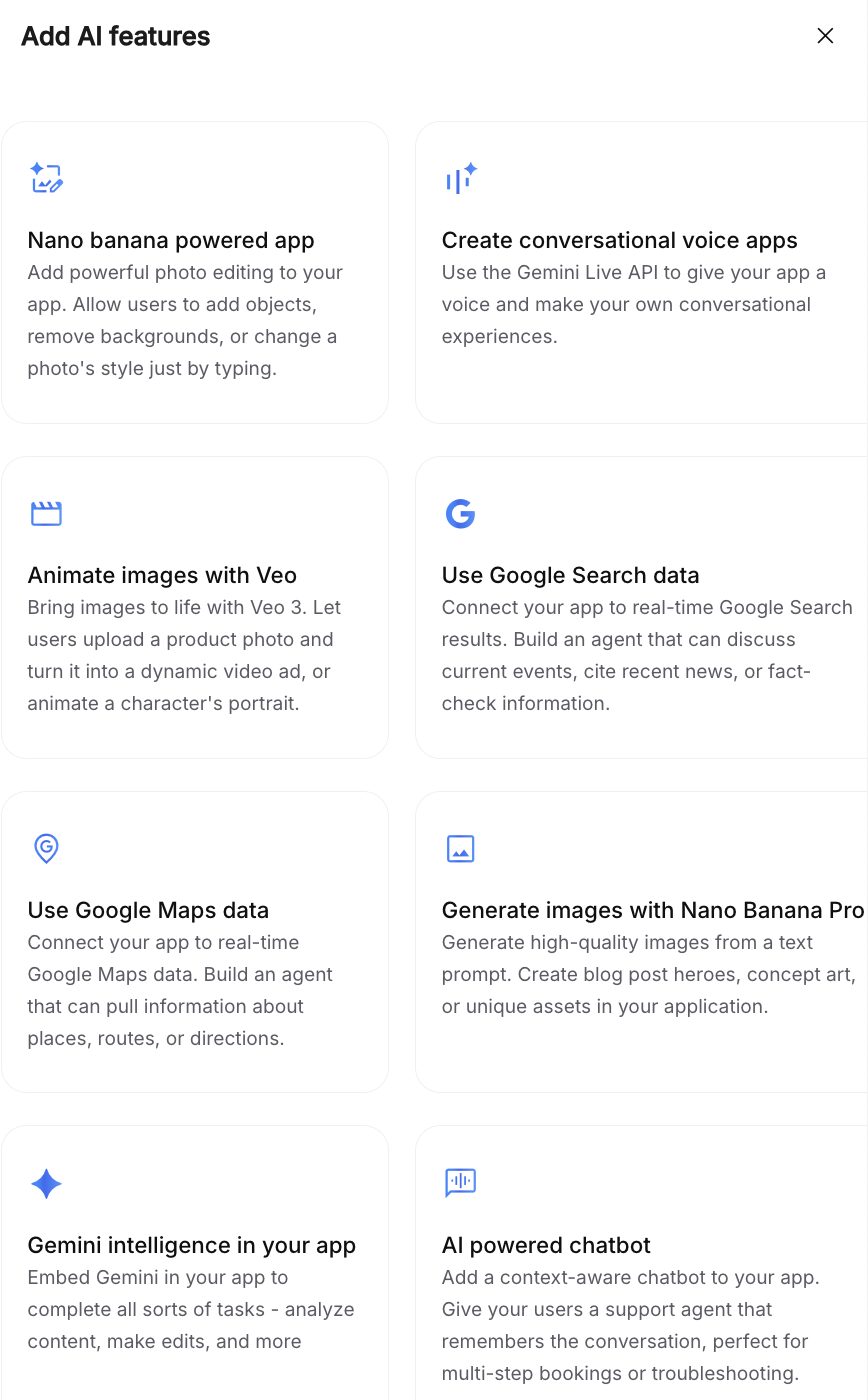
Google AI Studio’s Natural Language Processing (NLP) capabilities are state-of-the-art, primarily because the platform provides direct, unthrottled access to Google's most powerful models, Gemini 3.0 family (see options opposite).
Its power isn't just in "understanding text" it’s "Build Mode" (The Vibe Coding Engine) is a specialised environment within AI Studio designed for "Prompt-to-App" workflows rather than just "Prompt-to-Text."
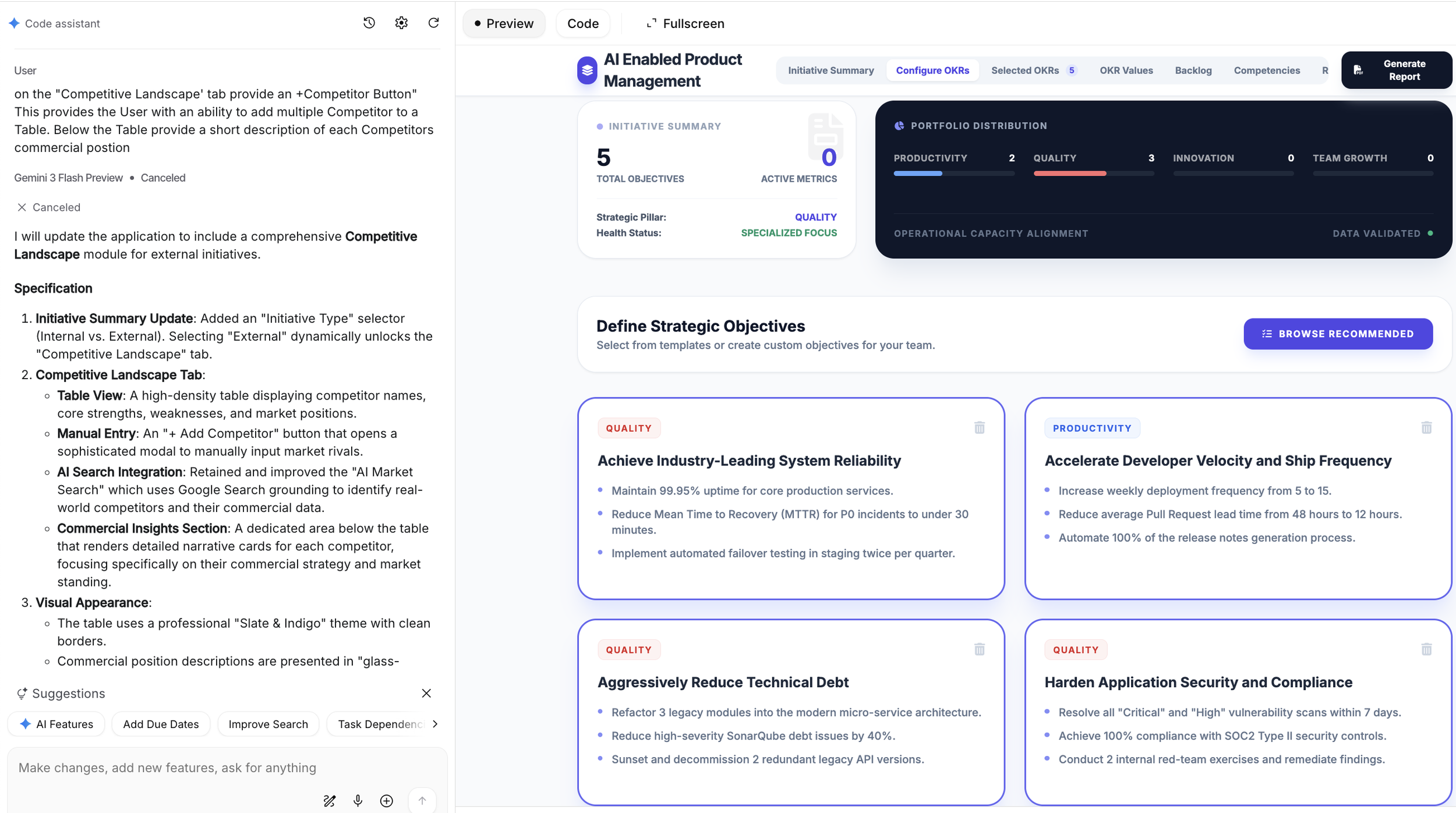
How it works: You type a natural language description (e.g., "Create a dashboard for identifying and selecting a series of Project Objectives and Key Results").
The Output: AI Studio generates a fully functional web application (typically in React or HTML/CSS/JS).
Live Preview: The interface splits your screen. On one side is the chat/code, and on the other is a live, interactive preview of the app running in real-time. You can click buttons, test inputs, and see the UI update instantly.