Establish Organisational Leadership to Support Generative AI (GenAI) Investment
Digital consulting advice to ensure your AI Strategy succeeds (And How Leadership, Not Tech, Fixes It)
The corporate world is currently witnessing a high-priced collision between speculative fever and operational reality. We are in the grip of a Generative AI frenzy, where organisations are aggressively liquidating capital to chase the promise of an automated utopia. Yet, beneath the press releases and pilot programs, the data tells a far grimmer story. The massive investments being funnelled into these technologies are hitting a wall of underwhelming returns.
This isn't a "technical gap." It isn't a lack of GPUs, nor is it a failure of LLM logic. It is a leadership vacuum. We are seeing the emergence of the "GenAI Divide"—a chasm separating those who treat AI as a shiny new tool and those who realise that technology of this magnitude requires a fundamental overhaul of management itself.

The 95% Failure Rate: A Wake-Up Call for the C-Suite
The statistics are a cold shower for any executive: according to The GenAI Divide: STATE OF AI IN BUSINESS 2025, failure rates for Generative AI initiatives have skyrocketed to as high as 95%. This isn't just a rounding error; it’s a systemic collapse of the traditional implementation model.
For decades, the C-Suite has outsourced its strategic thinking to "old school" management consultancies. These firms, with their standard frameworks and static PowerPoint decks, have proven spectacularly ill-equipped for the volatility of the AI era. They sold yesterday’s solutions for tomorrow’s problems, failing to anticipate the sheer velocity of the Generative AI shift.
Traditional management consulting firms fail to see the future
"If the old school management consultants were worth their €2,000+ per day consulting fees, surely they'd have anticipated the rapid emergence of Generative AI and would have steered their clients to far greater success."
This failure is the direct result of "over-excitement" masking a lack of implementation oversight. Traditional consulting models are too slow and too rigid for an environment where the state-of-the-art changes every Tuesday. While these firms were busy billing hours, the marketplace moved on, leaving their clients with expensive, orphaned pilot projects and no clear path to value.
The End of Command-and-Control
The age of AI is the final nail in the coffin for "Command-and-Control" management. In a volatile environment where technology evolves faster than a corporate approval cycle, micromanagement is a death sentence for innovation. Success now demands "Servant Leadership"—a model where the leader's primary role is to provide vision, integrity, and empathy, then get out of the way.
In this paradigm, Psychological Safety and Emotional Intelligence are no longer "soft skills" to be relegated to HR workshops; they are hard technical requirements. A leader who lacks the EQ to navigate a team through the uncertainty of digital transformation will inevitably become the bottleneck.
Look at the physical manifestation of the modern workforce: a sunlit, collaborative space where a team sits hunched over laptops, ears tucked into noise-canceling headphones. This isn't just aPinterest-worthy office shot; it is the visual architecture of autonomy. These professionals aren't waiting for a task list; they are navigating complex, self-directed workflows. For this environment to produce results, leadership must pivot from dictating "how" to clarifying "why."
The Paradox of "Minimum Oversight"
It sounds counter-intuitive to the traditional executive mind, but the most effective AI teams operate under a mandate of "Minimum Oversight." When teams are empowered to determine the best way to exploit new technology, they move with a speed that no hierarchy can match.
This doesn't mean an absence of accountability. On the contrary, it requires a more sophisticated form of it. By shifting the focus to high-level Strategy and Direction—specifically through the adoption of Objectives and Key Results (OKRs)—leaders provide the guardrails that allow for creative explosion. Minimum oversight, when paired with clear strategic direction, creates a far more efficient and effective output than any Gantt-chart-heavy management style ever could.
The Five Pillars of AI Readiness
Bridging the maturity gap requires more than just a gut feeling; it requires the kind of dynamic, digital advice that traditional firms fail to provide. Monetical dedicated digital consulting program fills this void, allowing program and product managers to introduce, develop and establish the right leadership and management cultural and operations methods across five critical pillars.
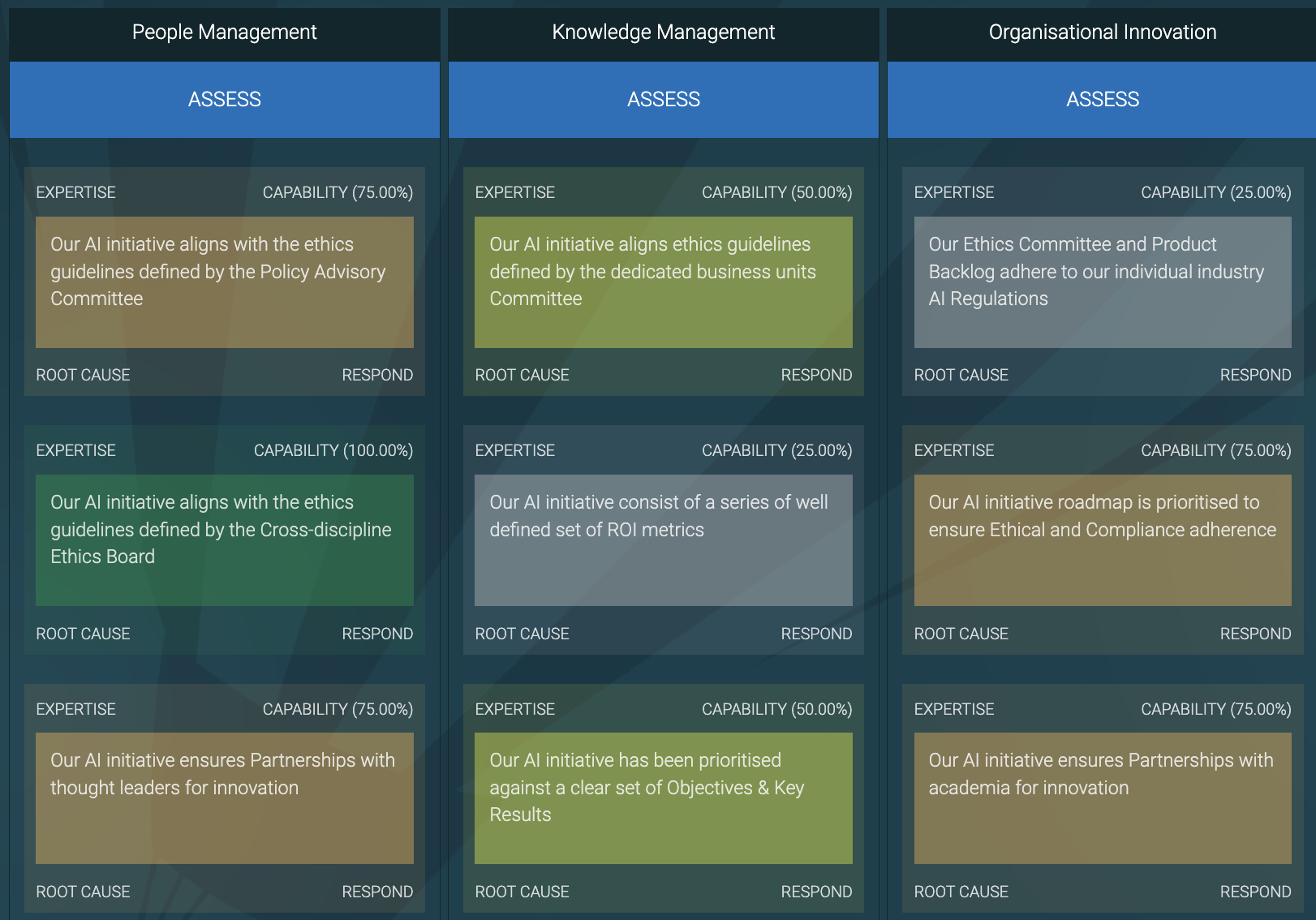
Not only does Monetical provide managers with means to diagnose organisational challenges, but consists of a library of digital advice and suggested corrective actions to move the needle immediately.
Strategy & Direction: Replacing micromanagement with OKR adoption and genuine team empowerment.
Performance & Reporting: Moving away from manual updates to clear KPIs and regular, automated inspection.
Culture & Innovation: Establishing servant leadership and psychological safety as the bedrock of the team.
Ways of Working: Shifting toward incremental delivery and the constant creation of measurable value.
Support & Assistance: Ensuring teams have the resources to work with minimum oversight and maximum autonomy.
Moving Beyond the Hype
The path to sustainable results in the Generative AI era is not paved with better code, but with better culture and management practices. Program and product managers must move beyond the hype and collaborate with stakeholders to execute a multi-front transformation.
This involves focusing on four critical work streams:
Promoting Leadership in an Era of Rapid Technology Development.
Ensuring Product Management Readiness for Generative AI Solutions.
Efficiently Developing the Organization’s First AI Agent.
Producing a Comprehensive AI Ethics Strategy.
Ultimately, the technology is merely an accelerator. If your leadership is heading in the wrong direction, AI will only get you there faster. As you look at your current roadmap, ask yourself the hard question: Is your leadership style the engine of your AI strategy, or is it the primary bottleneck?
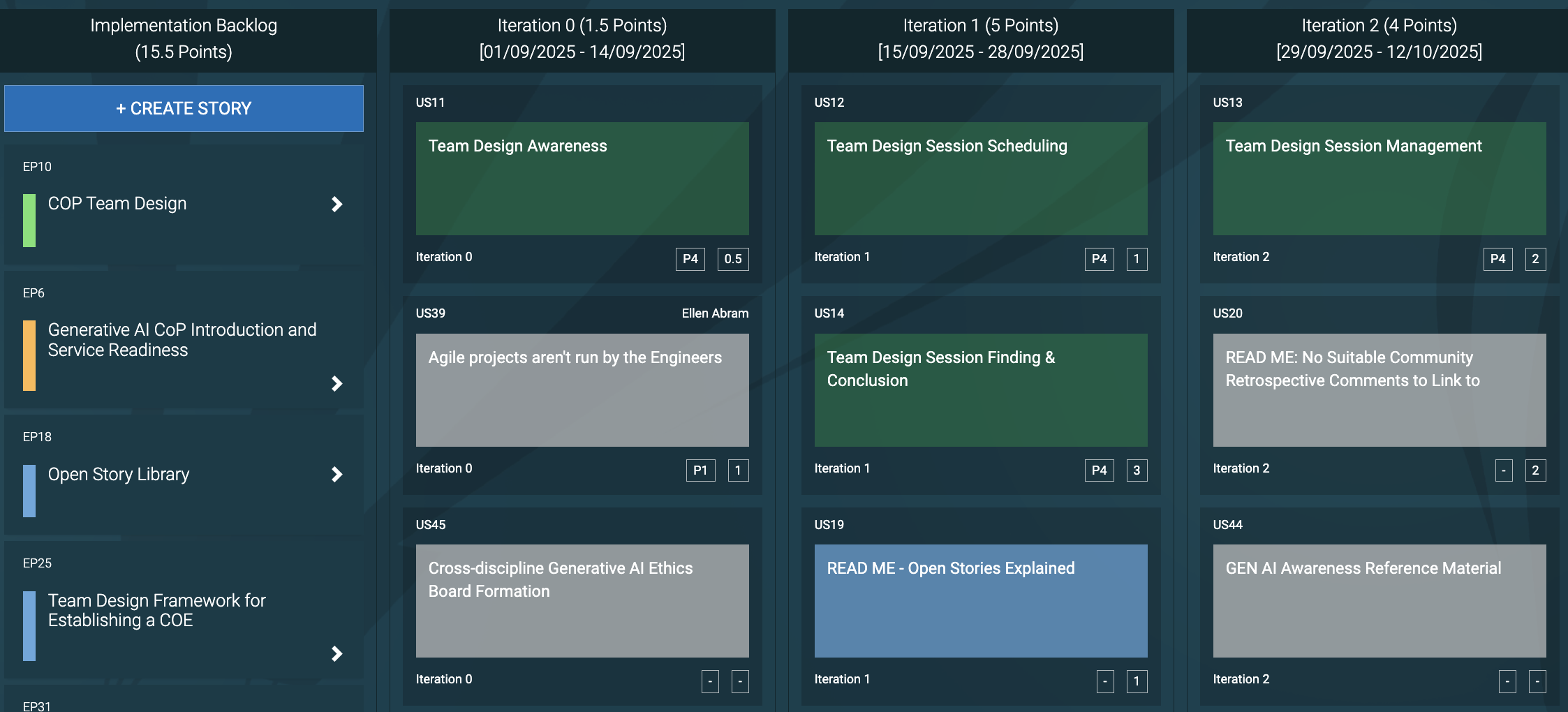
Digital Consulting Schedule
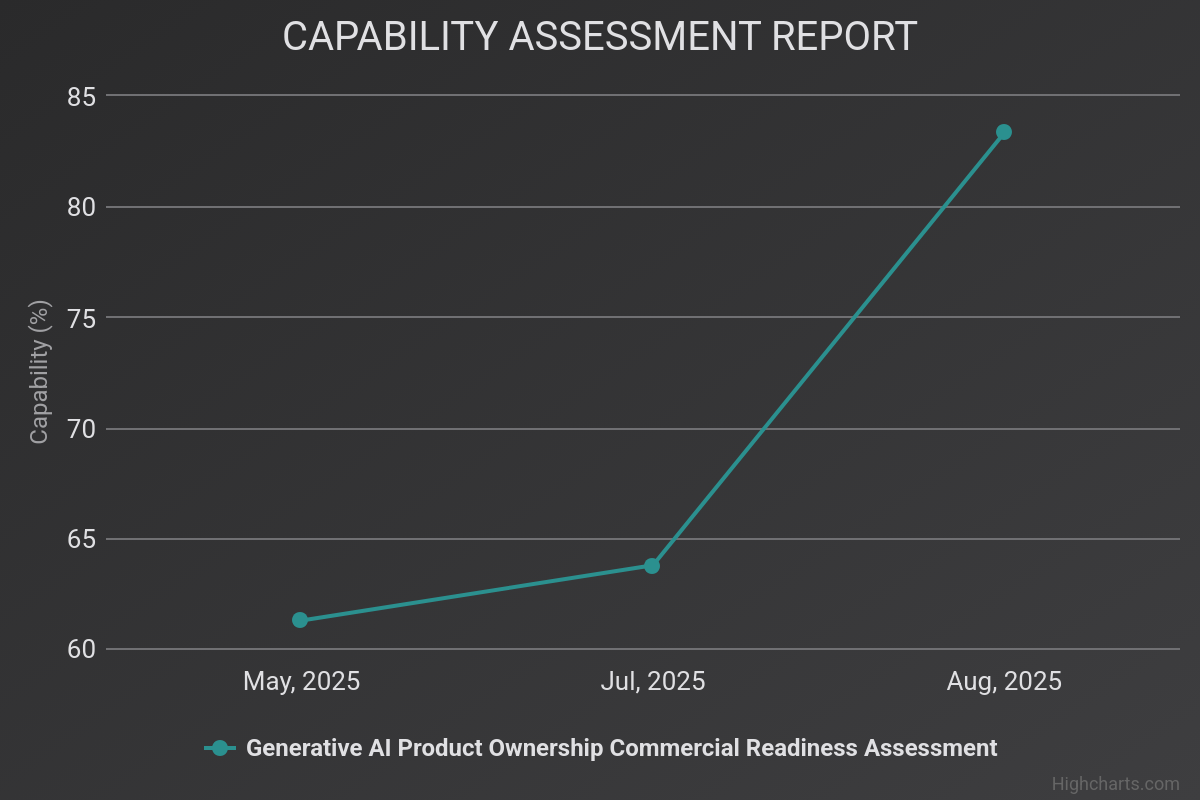
Establish Capability Readiness
Wealth of Consulting Advice

Increased Capability